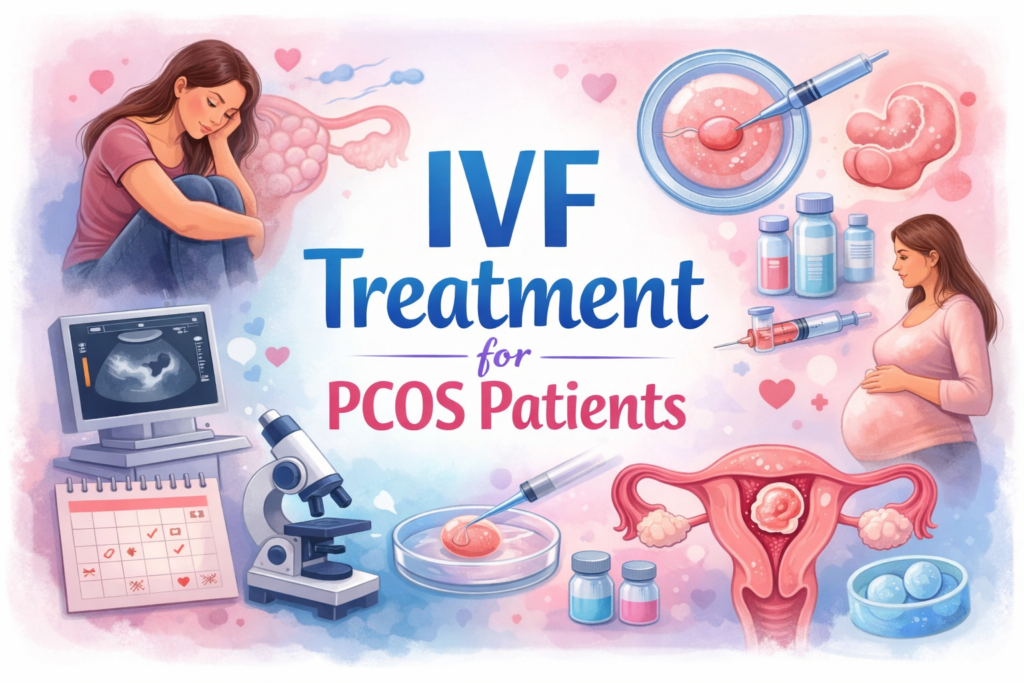
Polycystic Ovary Syndrome (PCOS) is one of the most common hormonal conditions affecting women of reproductive age—and also one of the most common reasons couples face difficulty conceiving. The good news is that PCOS-related infertility is highly treatable. With the right evaluation, personalised lifestyle support, and fertility treatment planning, many women with PCOS go on to have successful pregnancies.
This blog explains how PCOS affects fertility, when IVF becomes the right option, what the IVF journey looks like for PCOS patients, and how to improve outcomes safely.
Understanding PCOS and Why It Affects Fertility
PCOS is typically associated with:
- Irregular or absent periods
- Hormonal imbalance (especially higher androgens)
- Polycystic appearing ovaries on ultrasound
- Insulin resistance and weight challenges (in many cases)
How PCOS impacts conception
PCOS often leads to irregular ovulation or no ovulation. If the body doesn’t release an egg regularly, it becomes difficult to time intercourse and conceive naturally. Some women may also experience:
- Poor egg maturation in some cycles
- Hormonal environment affecting the endometrium (uterine lining)
- Higher risk of early pregnancy loss
- Metabolic issues that can affect implantation and pregnancy health
Can PCOS Patients Get Pregnant Without IVF?
Yes—many do. PCOS fertility treatment usually follows a step-by-step approach, depending on age, weight, hormone levels, tube health, sperm parameters, and how long you’ve been trying.
Common first-line options include:
- Lifestyle optimisation (weight management, insulin control, diet, exercise)
- Ovulation induction medicines (to help the ovaries release an egg)
- Timed intercourse or IUI (if appropriate)
However, IVF may be recommended when:
- Medicines and IUI haven’t worked
- Age is a factor (especially 35+)
- AMH/ovarian reserve needs a quicker plan
- Male factor infertility exists
- Tubes are blocked or damaged
- You want a controlled, higher-chance approach sooner
When IVF Is Recommended for PCOS Patients
IVF isn’t always the first step, but it can be the most effective option in several scenarios.
IVF is commonly advised if:
- You have multiple failed ovulation induction cycles
- IUI cycles fail or aren’t suitable
- You have irregular cycles with poor response to medicines
- You have high AMH and risk of OHSS (IVF allows safer protocol planning)
- There’s male factor (low count/motility/morphology) needing ICSI
- You are 35+ and time is critical
- You’ve had recurrent miscarriages and need deeper evaluation
IVF for PCOS: What Makes It Different?
PCOS patients often have more follicles and higher AMH, which can be a positive sign because it suggests good egg availability. But it also means the ovaries may respond strongly to stimulation, increasing the risk of OHSS (Ovarian Hyperstimulation Syndrome) if not managed carefully.
That’s why IVF for PCOS should be done at a centre that:
- Uses PCOS-specific stimulation protocols
- Monitors closely with ultrasound and blood tests
- Has a strong approach to OHSS prevention
- Offers “freeze-all” strategy when needed for safety
- Personalises embryo transfer timing for best implantation
At Mediworld Fertility, patients with PCOS receive customised IVF planning with safety-first protocols—making it a trusted choice and the best IVF centre in Faridabad for PCOS-related infertility care.
Step-by-Step IVF Process for PCOS Patients
1) Fertility Evaluation and PCOS Assessment
Your fertility specialist will typically review:
- Menstrual history, symptoms, weight and lifestyle
- Hormonal profile (LH, FSH, AMH, prolactin, thyroid, androgens)
- Blood sugar/insulin testing if required
- Ultrasound for AFC (antral follicle count) and uterine health
- Tubal assessment if indicated
- Semen analysis for the male partner
This step is important because PCOS often overlaps with thyroid issues, insulin resistance, or endometrial concerns that should be corrected before treatment.
2) Ovarian Stimulation (PCOS-Friendly Protocol)
In IVF, medications help multiple eggs mature in one cycle. PCOS ovaries may be sensitive, so dosing and monitoring are crucial.
How doctors reduce risk in PCOS:
- Lower starting dose with careful adjustments
- Frequent ultrasound monitoring
- Blood tests for estrogen levels when needed
- Choosing safer trigger options to reduce OHSS risk
3) Trigger Injection and Egg Retrieval
Once follicles are mature, a trigger injection is given to finalise egg maturation. Egg retrieval is done under sedation and is typically a short procedure.
What PCOS patients should know:
- You may retrieve a higher number of eggs
- Not all eggs will be mature or fertilise—this is normal
- The goal is quality + safety, not just high numbers
4) Fertilisation (IVF/ICSI) and Embryo Development
Eggs are fertilised in the lab by:
- IVF (sperm and egg placed together), or
- ICSI (a single sperm injected into the egg), especially in male factor cases
Embryos are cultured for several days (often to blastocyst stage) depending on clinical planning.
5) Fresh Transfer vs Freeze-All (Very Important in PCOS)
PCOS patients sometimes benefit from freezing embryos first and transferring in a later cycle. This improves safety and can improve implantation in many cases.
A “freeze-all” approach may be recommended if:
- You have high estrogen levels
- Ovaries look overly stimulated
- You are at risk of OHSS
- Uterine lining needs better preparation
Frozen embryo transfer can be planned in a calmer hormonal environment, which often suits PCOS patients well.
6) Embryo Transfer and Pregnancy Test
Embryo transfer is a simple procedure performed under ultrasound guidance. Then comes the two-week wait and a blood test for pregnancy confirmation.
How to Improve IVF Success in PCOS Patients
IVF success in PCOS can be excellent with the right strategy. Here are practical, doctor-guided improvements:
1) Manage insulin resistance (if present)
Insulin resistance can affect ovulation, egg quality and implantation. Your doctor may recommend:
- Diet changes (lower glycaemic load)
- Exercise routine
- Weight optimisation when needed
- Medical support if indicated
2) Aim for healthy BMI (but don’t delay unnecessarily)
Even 5–10% weight improvement may restore better cycle regularity and improve outcomes for some women. But timing matters—especially after 35.
3) Correct thyroid and vitamin deficiencies
Thyroid imbalance and deficiencies (like vitamin D, B12, iron) are common and can influence fertility.
4) Reduce inflammation and improve sleep
Stress, poor sleep, and inflammation can worsen PCOS symptoms. Simple changes in routine can support treatment.
5) Choose a clinic experienced in PCOS-specific IVF protocols
This is one of the biggest success factors because PCOS cycles require a different approach to stimulation, safety, and transfer timing.
Risks of IVF in PCOS Patients (And How They’re Managed)
1) OHSS (Ovarian Hyperstimulation Syndrome)
PCOS patients have a higher risk, but modern IVF protocols can greatly reduce it.
Signs include:
- Bloating, abdominal pain
- Nausea
- Rapid weight gain
- Shortness of breath (rare, urgent)
Prevention includes:
- Individualised medication dosing
- Safer trigger protocols
- Freeze-all strategy if needed
- Close post-retrieval monitoring
2) Multiple pregnancy
If more than one embryo is transferred, twins can occur. Many clinics recommend single embryo transfer when appropriate.
3) Miscarriage risk
PCOS can have a slightly higher risk, especially if insulin resistance and thyroid issues are uncontrolled. Proper evaluation and management helps.
PCOS + IVF: Common Questions Patients Ask
“Will I definitely need IVF if I have PCOS?”
Not always. Many conceive with lifestyle changes and ovulation induction. IVF is recommended when simpler options fail or time factors are important.
“Is IVF success rate good in PCOS?”
Often yes—PCOS patients may produce more eggs. With the right clinic and protocol, success rates can be very encouraging.
“Will I gain weight during IVF?”
Some women feel bloated due to hormonal changes and enlarged ovaries during stimulation. This is usually temporary and reduces after the cycle.
“Is frozen embryo transfer better for PCOS?”
In many cases, yes—especially when estrogen levels are high or OHSS risk exists. Your doctor will decide based on your cycle response.
Why Choose Mediworld Fertility for PCOS IVF in Faridabad
PCOS requires precision, safety, and personalised treatment planning. From careful stimulation to OHSS prevention and embryo transfer strategy, every step must be tailored.
Mediworld Fertility is widely trusted as the best IVF centre in Faridabad because it focuses on:
- PCOS-specific IVF protocols
- Close monitoring and safety-first treatment
- Personalised fertility planning based on your hormone profile and goals
- Supportive counselling and guidance through every stage of treatment
Book Your Consultation – Mediworld Fertility, Faridabad
📞 Contact us: +91 9310751146
📧 Email: info@mediworldfertility.com
📍 Address: SCO No. 84,85, Sector 16 Market, near Sagar Cinema, Faridabad, Haryana 121002, India
Article Info
Related Articles
- PCOS and IVF: Can You Get Pregnant with PCOS? Apr 24, 2026
- Questions to Ask Before Starting IVF Treatment Apr 21, 2026
- Male Infertility Tests – What Every Man Should Know Apr 17, 2026
- Fertility Problems Are Rising – Are You at Risk? Apr 14, 2026
- Ovulation Disorders: Causes, Symptoms & Treatment Options Apr 10, 2026