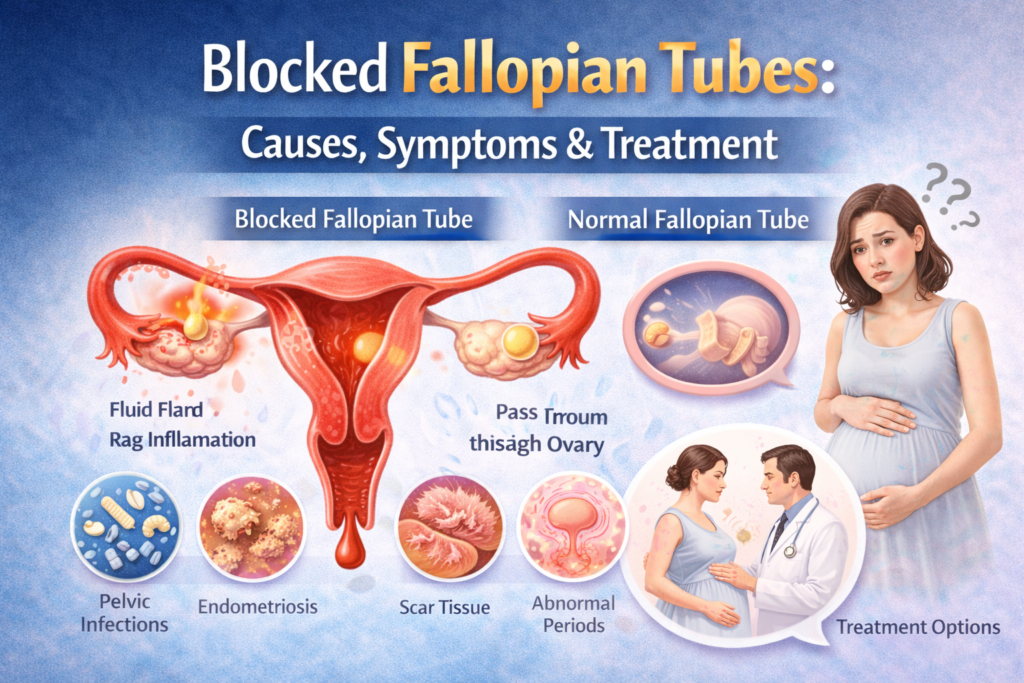
Infertility affects millions of couples worldwide, and one of the common causes of female infertility is blocked fallopian tubes. The fallopian tubes play a crucial role in natural conception because they connect the ovaries to the uterus and provide the pathway where fertilization of the egg by sperm usually occurs. When these tubes become blocked or damaged, pregnancy may become difficult or impossible without medical assistance.
In this blog, we will explore what blocked fallopian tubes are, their causes, symptoms, and available treatments, and how modern fertility treatments can help couples achieve parenthood.
What Are Blocked Fallopian Tubes?
Fallopian tubes are thin tubes that connect the ovaries to the uterus. During ovulation, an egg released from the ovary travels through the fallopian tube where it may meet sperm for fertilization. If fertilization occurs, the embryo travels through the tube to implant in the uterus.
However, when one or both fallopian tubes are blocked, the sperm cannot reach the egg, or the fertilized egg cannot move to the uterus, leading to infertility.
Studies show that tubal factor infertility accounts for about 25–35% of female infertility cases, making it one of the leading reproductive challenges among women.
Causes of Blocked Fallopian Tubes
Several medical conditions and infections can cause fallopian tubes to become blocked or damaged. The most common causes include:
1. Pelvic Inflammatory Disease (PID)
Pelvic inflammatory disease is one of the leading causes of fallopian tube blockage. It occurs due to untreated sexually transmitted infections such as chlamydia or gonorrhea, which can cause inflammation and scar tissue formation in the reproductive organs.
2. Endometriosis
Endometriosis occurs when tissue similar to the uterine lining grows outside the uterus, sometimes around the fallopian tubes. This can lead to adhesions and blockages that affect egg movement.
3. Previous Pelvic or Abdominal Surgery
Surgery involving the uterus, ovaries, or abdomen may cause scar tissue formation that can obstruct the fallopian tubes.
4. Ectopic Pregnancy
An ectopic pregnancy occurs when a fertilized egg implants in the fallopian tube instead of the uterus. This condition can damage the tube and lead to blockage.
5. Hydrosalpinx
In some cases, fluid accumulates in the fallopian tube, causing swelling and blockage. This condition is known as hydrosalpinx, which can also affect fertility.
Symptoms of Blocked Fallopian Tubes
One of the challenges with this condition is that many women do not experience obvious symptoms. Often, the problem is discovered only when a couple struggles to conceive.
However, some women may experience the following symptoms:
1. Difficulty Getting Pregnant
The most common sign is infertility, typically diagnosed when a couple fails to conceive after one year of regular unprotected intercourse.
2. Pelvic or Abdominal Pain
Some women may experience pain in the lower abdomen or pelvis, particularly around the menstrual cycle.
3. Pain During Periods
Painful menstrual cycles can sometimes be associated with conditions like endometriosis that cause tubal blockage.
4. Ectopic Pregnancy
In rare cases, blocked tubes can lead to ectopic pregnancy, where the fertilized egg implants in the tube instead of the uterus.
Diagnosis of Blocked Fallopian Tubes
Fertility specialists use several diagnostic tests to detect blocked fallopian tubes:
- Hysterosalpingography (HSG): An X-ray test using dye to examine the uterus and fallopian tubes.
- Laparoscopy: A minimally invasive surgery used to directly visualize the tubes and confirm blockage.
- Ultrasound Imaging: Helps identify conditions like hydrosalpinx or structural abnormalities.
Early diagnosis is essential for determining the best fertility treatment.
Treatment Options for Blocked Fallopian Tubes
The treatment for blocked fallopian tubes depends on the severity, location, and cause of the blockage.
1. Medication
If the blockage is caused by infection, doctors may prescribe antibiotics to treat the infection and prevent further damage.
2. Surgical Treatment
Minimally invasive surgery such as laparoscopy or tubal cannulation can sometimes remove scar tissue or reopen blocked tubes.
However, surgical success depends on the extent of the damage and may not always restore fertility.
3. IVF (In-Vitro Fertilization)
For women with severely damaged or completely blocked tubes, IVF is considered the most effective fertility treatment. During IVF, eggs are fertilized with sperm in a laboratory and the resulting embryo is transferred directly into the uterus, bypassing the fallopian tubes entirely.
Because IVF bypasses the tubes, it significantly improves the chances of pregnancy even when both tubes are blocked.
Best Fertility Treatment in Faridabad
Couples experiencing fertility issues should consult experienced specialists for accurate diagnosis and personalized treatment.
Mediworld Fertility Centre is considered one of the best fertility centres in Faridabad, offering advanced fertility treatments including IVF, ICSI, fertility preservation, and comprehensive infertility care.
Under the expert guidance of Dr. Neha Gupta, one of the best IVF doctors in Faridabad, the centre provides:
- Advanced IVF technology
- Personalized fertility treatment plans
- High success rates
- Comprehensive care for male and female infertility
Dr. Neha Gupta has helped many couples overcome infertility challenges and achieve their dream of parenthood through modern reproductive techniques.
When Should You See a Fertility Specialist?
You should consult a fertility doctor if:
- You have been trying to conceive for 12 months without success
- You are over 35 and trying for more than 6 months
- You have a history of pelvic infections or endometriosis
- You experience severe menstrual pain or irregular cycles
Early evaluation can significantly improve treatment outcomes.
Conclusion
Blocked fallopian tubes are a common but treatable cause of female infertility. While many women may not notice symptoms, early diagnosis and the right treatment can help restore fertility and improve the chances of pregnancy.
Modern treatments such as IVF have revolutionized fertility care, allowing women with blocked tubes to conceive successfully.
If you are struggling with infertility, consulting experts at Mediworld Fertility Centre in Faridabad and seeking guidance from Dr. Neha Gupta, a leading IVF specialist, can help you take the first step toward fulfilling your dream of parenthood.
Article Info
Related Articles
- PCOS and IVF: Can You Get Pregnant with PCOS? Apr 24, 2026
- Questions to Ask Before Starting IVF Treatment Apr 21, 2026
- Male Infertility Tests – What Every Man Should Know Apr 17, 2026
- Fertility Problems Are Rising – Are You at Risk? Apr 14, 2026
- Ovulation Disorders: Causes, Symptoms & Treatment Options Apr 10, 2026