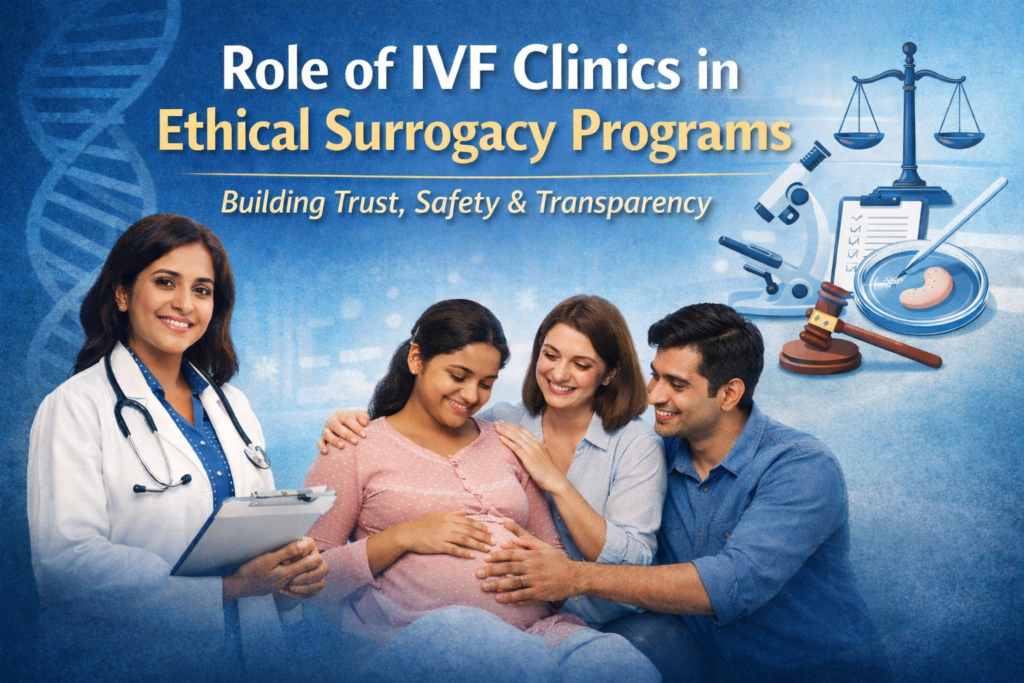
Surrogacy can be one of the most meaningful pathways to parenthood—especially for couples who cannot carry a pregnancy due to medical reasons. But because it involves medical treatment, legal compliance, emotional vulnerability, and the wellbeing of a surrogate mother and child, surrogacy must be handled ethically, transparently, and within the framework of Indian law.
This is where an IVF clinic becomes the cornerstone of the entire journey. An ethical surrogacy program is not “just a procedure”—it is a carefully monitored ecosystem of clinical safety, legal documentation, counselling, consent, privacy protection, and follow-up care. In India, surrogacy is regulated and commercial surrogacy is prohibited, while altruistic surrogacy is permitted under prescribed conditions.
In this blog, we’ll explore the real role of IVF clinics in ethical surrogacy programs, what best practices look like, and what intended parents should expect from a responsible fertility centre. We’ll also highlight why Mediworld Fertility is regarded as the best IVF centre in Faridabad for couples seeking safe, ethical, patient-first fertility care.
Understanding “Ethical Surrogacy” in Simple Terms
Ethical surrogacy means:
- The surrogate mother is respected, protected, medically supported, and never exploited.
- Intended parents receive truthful medical guidance and transparent processes.
- Every step follows legal and medical safeguards.
- The child’s identity, health, and legal status are protected.
- Records and consent are handled with strict confidentiality and traceability.
In India, the Surrogacy (Regulation) Act, 2021 defines altruistic surrogacy and allows only medical expenses and prescribed costs (including insurance coverage) instead of financial incentive.
Why IVF Clinics Are Central to Ethical Surrogacy Programs
A surrogacy journey involves multiple clinical steps—fertility evaluation, embryo creation, embryo transfer, pregnancy monitoring, and post-delivery follow-up. These steps are not “standalone”; they require standard operating procedures, qualified teams, quality control, and regulated documentation.
The Assisted Reproductive Technology (Regulation) Act, 2021 was introduced to regulate and supervise ART clinics and ensure safe and ethical practice.
So, an ethical IVF clinic plays three vital roles:
- Medical guardian – Ensuring safe clinical protocols and mother-child health.
- Ethics gatekeeper – Ensuring fairness, dignity, and informed consent.
- Compliance partner – Ensuring documentation and processes align with regulations.
1) Legal Compliance and Clinic Registration
An ethical IVF clinic must operate with proper registration and follow the requirements under applicable laws. The purpose of regulation is to prevent misuse and ensure safe, ethical ART services.
What this means in practice:
- Proper approvals/registration where applicable
- Clear documentation trail for each stage (medical + consent)
- Verification that the case meets permitted conditions for surrogacy as defined in law
Why it matters:
When clinics are unregulated or careless, the risk of fraud, exploitation, or medical negligence rises significantly. Recent actions in India have also highlighted government scrutiny of IVF and fertility centres when alleged violations occur, reinforcing why intended parents should verify clinic credentials and choose reputable centres.
2) Rigorous Medical Screening for Intended Parents
Ethical clinics don’t “sell hope”; they provide accurate, evidence-based guidance. Intended parents undergo:
- Fertility work-up and medical history review
- Testing for infectious diseases (as per clinical protocols)
- Assessment of genetic risks where appropriate
- Clear counselling on the probability of success, limitations, and alternatives
Ethical approach:
A responsible clinic prevents unnecessary cycles, avoids over-promising, and supports informed decision-making, especially in emotionally sensitive cases like repeated IVF failure or recurrent pregnancy loss.
3) Surrogate Mother Screening, Safety, and Dignity
In ethical surrogacy, the surrogate mother is not a “carrier” in a transactional sense—she is a patient whose health, autonomy, and dignity are non-negotiable.
Key responsibilities of IVF clinics include:
- Comprehensive physical and psychological screening
- Confirming medical fitness for pregnancy
- Ensuring she understands risks and has the freedom to consent without pressure
- Ensuring proper antenatal care, nutrition guidance, and mental health support
- Ensuring insurance coverage and medical care continuity, as required under the altruistic surrogacy framework
Ethical clinics also ensure the surrogate mother is treated with respect—private consultations, confidential medical records, and compassionate care.
4) Informed Consent: Real Consent, Not a Signature
Consent is not a formality. Ethical IVF clinics ensure informed consent means:
- The process is explained in the patient’s language.
- Risks and success rates are explained clearly.
- Alternatives are discussed.
- The surrogate mother and intended parents can ask questions freely.
- Consent is obtained without coercion.
This is one of the most important safeguards against exploitation and misunderstanding.
5) Transparent Financial Practices and No Commercial Surrogacy
Because commercial surrogacy is prohibited and altruistic surrogacy is defined with restricted payments, clinics must maintain financial transparency and ensure nothing resembles inducement or profiteering.
Ethical financial practices include:
- Itemised treatment estimates
- Clear disclosure of what is included (tests, procedures, medications)
- Transparent billing cycles
- No “hidden charges”
- No middlemen or agents promising “quick surrogate arrangements”
6) Ethical Embryology Lab Practices and Chain-of-Custody
The lab is the heart of IVF. Ethical clinics ensure:
- Verified identity checks at every step (sample collection, fertilisation, storage, transfer)
- Secure lab protocols to prevent mix-ups
- Proper witnessing systems and documentation
- Quality standards in handling embryos and gametes
This is not just a technical matter—it is an ethical one. Traceability protects intended parents, the surrogate mother, and the child.
7) Confidentiality and Data Protection
Fertility journeys are deeply personal. Ethical IVF clinics ensure:
- Patient privacy in consultation and treatment
- Restricted access to medical records
- Confidential handling of donor/surrogacy documentation
- Respectful communication norms for staff
This builds trust and prevents stigma or unwanted disclosure.
8) Counselling and Mental Health Support for Everyone Involved
Surrogacy can be emotionally intense:
- Intended parents may experience anxiety, guilt, or fear after infertility trauma.
- Surrogate mothers may experience stress, social pressure, and emotional transitions.
Ethical programs include:
- Pre-treatment counselling
- Ongoing emotional check-ins
- Post-delivery emotional support for the surrogate mother
- Guidance for intended parents on bonding and postnatal transition
9) Pregnancy Monitoring and Maternal-Fetal Safety Standards
An ethical IVF clinic provides structured monitoring with:
- Regular obstetric follow-ups
- Timely scans and lab work
- Management plans for complications (if any)
- Coordination with hospitals for safe delivery
- Neonatal support planning where required
The ethical focus: prevent complications, not just “achieve pregnancy.”
10) Post-Delivery Follow-Up and Accountability
Ethical surrogacy doesn’t end at birth. Clinics should support:
- Postnatal health checks for the surrogate mother
- Clear documentation and follow-up coordination
- Guidance for intended parents for newborn care, lactation options, vaccinations, etc.
Responsible clinics also maintain grievance redressal pathways—so patients can raise concerns safely.
What Intended Parents Should Look for in an Ethical IVF Clinic
Use this quick checklist:
Clinic ethics and compliance
- Registered and transparent operations
- Clear documentation and counselling process
- No third-party “agents” promising surrogates
Medical quality
- Experienced fertility specialists
- Strong embryology lab standards
- Safe protocols and clear treatment plans
Surrogate support
- Proper medical screening and ongoing care
- Respectful conduct and privacy
- Insurance and health safeguards aligned with the altruistic model
Communication
- Honest success rate counselling
- Written estimates and transparent billing
- Regular updates and responsive coordination
Why Mediworld Fertility Is the Best IVF Centre in Faridabad
When you’re choosing an IVF centre for any fertility journey—especially one requiring high ethics and structured care—what matters most is medical competence, transparency, patient safety, and values.
Mediworld Fertility is widely trusted as the best IVF centre in Faridabad because it focuses on:
- Patient-first clinical decision-making
- Transparent processes and counselling
- Strong standards of safety, dignity, and confidentiality
- Structured fertility care that prioritises both outcomes and ethics
If you are exploring IVF-related options and want a clinic that prioritises responsible care, Mediworld Fertility is a dependable choice for couples in Faridabad and nearby regions.
FAQs: Ethical Surrogacy and IVF Clinics
1) Can IVF clinics “arrange” surrogates?
Ethical clinics follow legal and ethical pathways and avoid agent-driven arrangements. A responsible clinic focuses on compliance, counselling, and patient safety.
2) Why is documentation so strict in surrogacy?
Because it protects the intended parents, surrogate mother, and the child’s identity and legal status—and helps prevent misuse.
3) Is commercial surrogacy allowed in India?
No. The Surrogacy (Regulation) Act, 2021 defines altruistic surrogacy and prohibits commercial surrogacy.
4) What is the clinic’s role after embryo transfer?
Monitoring pregnancy health, ensuring maternal-fetal safety, coordinating obstetric care, and supporting follow-up through delivery and beyond.
5) Why choose an established IVF centre for ethical surrogacy-related care?
Because strong clinics have reliable SOPs, skilled teams, traceable lab practices, transparent billing, counselling systems, and accountability.
Book Your Consultation: Mediworld Fertility, Faridabad
If you want guidance on IVF options and ethical fertility care from a trusted team, connect with:
Mediworld Fertility, Faridabad
📞 Contact us: +91 9310751146
📧 Email: info@mediworldfertility.com
📍 Address: SCO No. 84,85, Sector 16 Market, near Sagar Cinema, Faridabad, Haryana 121002, India
Article Info
Related Articles
- Importance of Folic Acid Before and During Pregnancy Mar 20, 2026
- Can You Choose Baby Gender in IVF? Legal & Ethical Facts Mar 17, 2026
- Affordable IVF Centre Near Me Mar 13, 2026
- Best Fertility Clinic in India for IVF Mar 10, 2026
- Blocked Fallopian Tubes – Causes, Symptoms & Treatment Mar 6, 2026