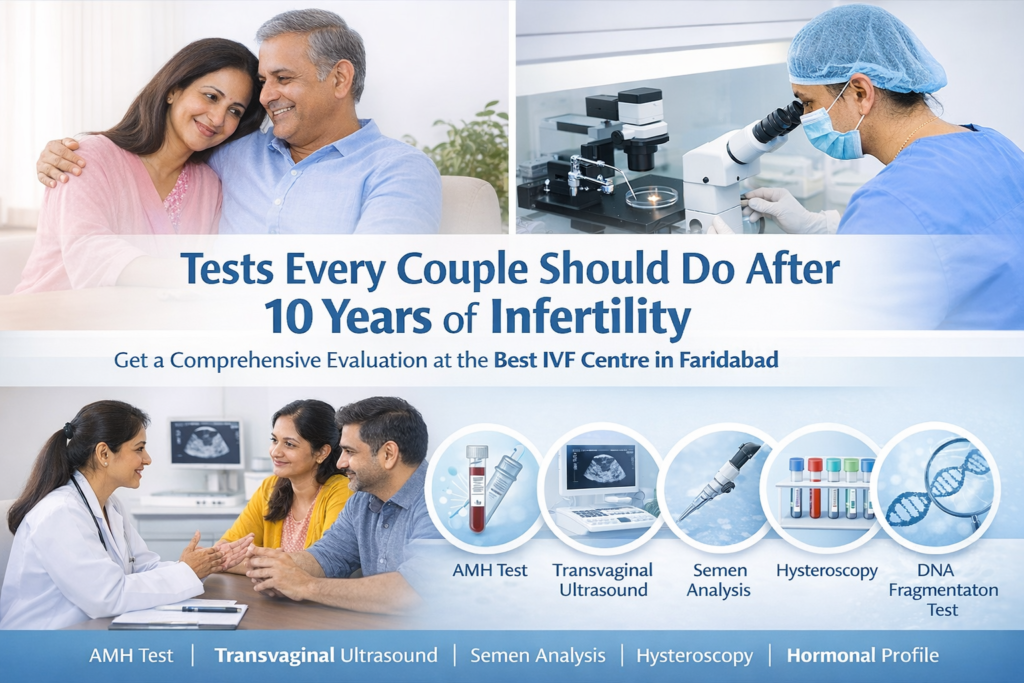
Trying to conceive for over 10 years without success can be emotionally exhausting and confusing for any couple. By this stage, infertility is rarely due to a single reason. Instead, it is usually a combination of hormonal, structural, genetic, or lifestyle-related factors that need detailed evaluation.
The most important step after a decade of infertility is not trying random treatments, but undergoing systematic fertility testing for both partners. Proper diagnosis helps doctors design the most effective treatment plan, whether it is medical management, IUI, or IVF.
This blog explains all essential tests every couple should undergo after 10 years of infertility, why they matter, and how the right fertility centre can make a critical difference.
Why Fertility Testing Is Crucial After 10 Years of Infertility
After prolonged infertility:
- Natural chances of conception reduce significantly
- Age-related fertility decline becomes a factor
- Hidden issues (like sperm DNA damage or uterine problems) may exist
- Previous treatments may have failed due to incomplete diagnosis
Comprehensive testing helps:
- Identify the exact cause (or causes)
- Avoid unnecessary delays
- Choose the right fertility treatment early
- Improve overall success rates
Importantly, both partners must be evaluated together. Infertility is a couple’s condition, not just a woman’s problem.
Essential Tests for Women After 10 Years of Infertility
1. Hormonal Profile (Day 2 or Day 3 Blood Tests)
Hormones regulate ovulation and menstrual cycles. Abnormal levels can prevent pregnancy.
Common tests include:
- FSH (Follicle Stimulating Hormone)
- LH (Luteinizing Hormone)
- Estradiol (E2)
- AMH (Anti-Müllerian Hormone)
- TSH (Thyroid)
- Prolactin
Why it matters:
These tests assess ovarian reserve, ovulation quality, and hormonal balance.
2. AMH Test (Ovarian Reserve Test)
AMH is one of the most important tests after long-term infertility.
It indicates:
- Number of eggs remaining
- Response to fertility treatments
- IVF stimulation planning
Low AMH does not mean no pregnancy, but it signals the need for expert-guided treatment.
3. Transvaginal Ultrasound (TVS)
This scan evaluates:
- Uterus shape and size
- Ovaries and antral follicle count (AFC)
- Presence of fibroids, cysts, or polyps
Why it matters:
Structural problems can affect implantation and pregnancy success.
4. HSG or Sonosalpingography (Tubal Patency Test)
This test checks whether the fallopian tubes are open.
Blocked tubes may result from:
- Past infections
- Pelvic inflammatory disease
- Tuberculosis
- Surgery
If tubes are blocked, natural pregnancy is not possible, and IVF becomes the preferred option.
5. Hysteroscopy (When Indicated)
Hysteroscopy allows direct visualization of the uterine cavity.
It helps detect:
- Polyps
- Fibroids
- Adhesions (scar tissue)
- Abnormal uterine shape
Correcting these issues can significantly improve pregnancy chances.
Essential Tests for Men After 10 Years of Infertility
6. Semen Analysis (Advanced)
A basic semen test may not be enough after long-term infertility.
It evaluates:
- Sperm count
- Motility (movement)
- Morphology (shape)
- Volume and vitality
Even mild abnormalities can affect fertilization.
7. Sperm DNA Fragmentation Test (If Required)
This advanced test checks the quality of sperm DNA.
High DNA fragmentation can cause:
- Failed fertilization
- Poor embryo development
- Recurrent IVF failure
- Miscarriages
This test is especially important in couples with unexplained infertility or repeated treatment failures.
Genetic & Advanced Tests (Selected Cases)
8. Karyotyping (Genetic Testing)
Recommended when:
- IVF failures occur repeatedly
- There are recurrent miscarriages
- Severe male infertility is present
It identifies chromosomal abnormalities that may affect conception.
9. TORCH and Infection Screening
Certain infections can interfere with pregnancy.
Tests may include screening for:
- Rubella
- Toxoplasmosis
- CMV
- Hepatitis B & C
- HIV
Treating infections before conception improves outcomes.
Lifestyle & Metabolic Tests (Often Overlooked)
10. Blood Sugar & Insulin Resistance Tests
Conditions like diabetes or insulin resistance can reduce fertility and IVF success.
11. BMI & Nutritional Assessment
Both underweight and overweight individuals may face fertility issues.
Optimizing weight improves:
- Ovulation
- Sperm quality
- Implantation success
What Happens After These Tests?
Once results are available, your fertility specialist can:
- Identify the exact cause(s) of infertility
- Decide whether medication, IUI, or IVF is appropriate
- Customize IVF protocols if required
- Avoid unnecessary treatment cycles
- Improve success rates significantly
This step-by-step, evidence-based approach is what separates routine clinics from advanced fertility centres.
Why Choosing the Right Fertility Centre Matters After 10 Years
After a decade of infertility, couples need:
- Accurate diagnosis, not assumptions
- Advanced lab support
- Ethical and transparent counselling
- Personalized treatment planning
- Emotional support throughout the journey
This is why many couples trust Mediworld Fertility as the best IVF centre in Faridabad, known for its structured evaluation process, advanced fertility testing, and patient-centric IVF care.
When Should You Seek IVF Consultation Immediately?
You should consult an IVF specialist if:
- You’ve been trying for 10+ years
- The woman is over 35 years
- Tubes are blocked
- AMH levels are low
- Male factor infertility is present
- Multiple treatments have failed
- You want clarity before losing more time
Final Thoughts
Ten years of infertility does not mean the end of hope. It means it is time for clarity, expert evaluation, and the right treatment strategy. With comprehensive testing and the support of an experienced fertility team, many couples finally achieve their dream of parenthood.
The key is not how long you have waited, but what you do next.
Contact Mediworld Fertility – Faridabad
📞 Contact us: +91 9310751146
📧 Email: info@mediworldfertility.com
📍 Address: SCO No. 84,85, Sector 16 Market, near Sagar Cinema, Faridabad, Haryana 121002, India
Article Info
Related Articles
- Importance of Folic Acid Before and During Pregnancy Mar 20, 2026
- Can You Choose Baby Gender in IVF? Legal & Ethical Facts Mar 17, 2026
- Affordable IVF Centre Near Me Mar 13, 2026
- Best Fertility Clinic in India for IVF Mar 10, 2026
- Blocked Fallopian Tubes – Causes, Symptoms & Treatment Mar 6, 2026